
How to Calculate the True Cost of Owning a Car
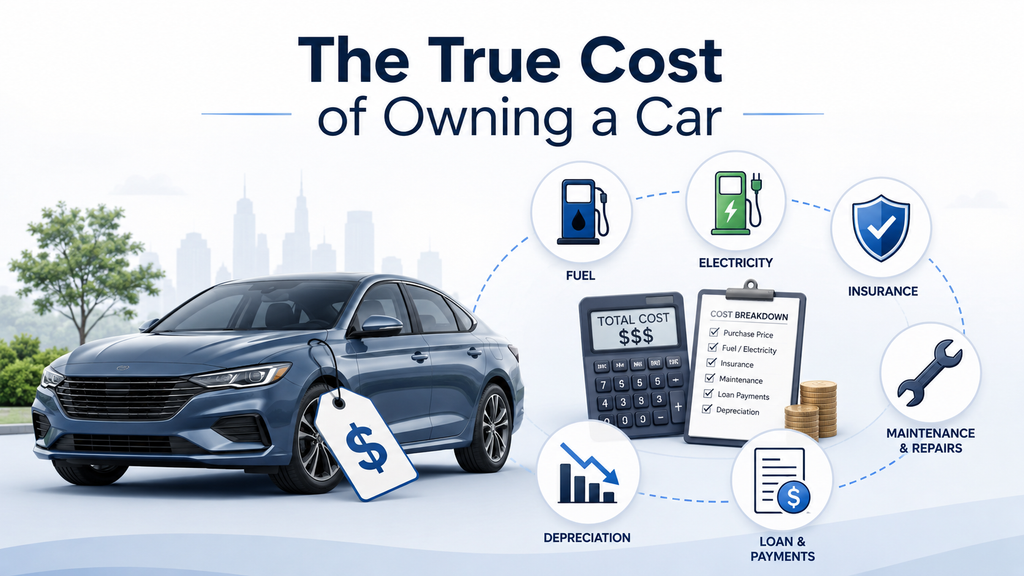
Buying a car costs much more than the price on the window sticker. Fuel, electricity, insurance, maintenance, financing and depreciation can add thousands of dollars to the real cost of ownership.
Before choosing a vehicle, it helps to look at the total cost rather than simply comparing purchase prices.
- Purchase Price
Start with the actual amount you expect to pay for the vehicle. This may include the vehicle price, taxes, registration fees and other upfront costs.
If you are comparing two cars, use realistic purchase prices for both vehicles rather than just the manufacturer’s suggested retail price.
- Fuel or Electricity Costs
For a gasoline vehicle, annual fuel cost depends mainly on:
- How many miles you drive each year
- The vehicle’s fuel economy
- The price of gasoline
A driver who travels 12,000 miles per year in a 30 MPG vehicle will use about 400 gallons of gasoline annually.
If gasoline costs $3.50 per gallon, that is about $1,400 per year in fuel.
Electric vehicles are calculated differently. Their energy use is normally measured in kilowatt-hours per 100 miles. Electricity prices can also vary significantly depending on where and when the vehicle is charged.
This is why comparing an EV with a gasoline or hybrid vehicle should be based on your own mileage and local energy prices.
- Insurance
Insurance can make a significant difference to the total cost of a vehicle.
Two cars with similar purchase prices may have very different insurance premiums because repair costs, vehicle value, safety technology and theft rates can affect insurance pricing.
When possible, obtain an insurance quote before purchasing a vehicle.
- Maintenance and Repairs
Every vehicle requires maintenance.
Typical costs can include:
- Tires
- Oil changes
- Brakes
- Filters
- Scheduled servicing
- Unexpected repairs
Electric vehicles generally have fewer moving powertrain components than gasoline vehicles, but they still require tires, brakes, suspension work and other maintenance.
Maintenance costs also change as a vehicle gets older, so long-term ownership should be considered separately from the first year of ownership.
- Depreciation
Depreciation is often one of the largest costs of owning a car, even though you do not receive a monthly bill for it.
For example, if you purchase a vehicle for $40,000 and sell it five years later for $22,000, the vehicle has lost $18,000 in value.
That $18,000 is part of your real ownership cost.
Depreciation can vary considerably between brands, models, vehicle types and market conditions.
- Loan Interest
If you finance a vehicle, the purchase price is not the only amount you will pay.
Your loan cost depends on:
- Amount financed
- Interest rate
- Loan term
- Down payment
A longer loan term may reduce the monthly payment but can increase the total amount of interest paid.
When comparing vehicles, it is useful to look at both the monthly payment and the total amount paid over the full loan period.
- How Long You Keep the Car
Ownership period matters.
A vehicle that appears expensive over three years may become more economical if kept for eight years. On the other hand, high maintenance or depreciation may make another vehicle less attractive over time.
That is why total ownership cost should always be calculated over the number of years you realistically expect to keep the vehicle.
- Your Driving Habits Matter
There is no single “cheapest car” for everyone.
Someone driving 25,000 miles per year may save much more by choosing a fuel-efficient vehicle than someone driving only 5,000 miles per year.
Likewise, an EV may be very economical for someone who can charge cheaply at home, while the calculation may look different for someone relying mainly on public fast charging.
Use Your Own Numbers
The most useful car-cost comparison is based on your own situation.
CheckCarCost calculators let you adjust important assumptions such as mileage, fuel prices, electricity rates, vehicle prices, financing and ownership period.
Small changes in these figures can make a large difference over several years.
Before buying your next vehicle, compare the total cost — not just the sticker price.
The goal of CheckCarCost is to help drivers understand those numbers clearly so they can make a better-informed decision.